16:07:30 UTC
Multi-vendor commerce platform for modern businesses.
Most e-commerce products focus heavily on the customer experience.
What often receives less attention are the operational tools responsible for keeping the marketplace running.
As MaketMasta evolved, it became clear that multiple user groups needed dedicated experiences:
Customers needed a simpler mobile shopping journey.
Vendors needed visibility into orders, payouts, and performance.
Administrators needed better control over disputes, payouts, vendors, and marketplace operations.
Logistics partners needed a streamlined way to validate deliveries.
The Challenge
The project presented three distinct design challenges.
- Building Operational Confidence: Administrators needed visibility into thousands of marketplace activities, from vendor approvals to payout requests and dispute resolution. Without clear workflows, operational tasks became difficult to track and manage.
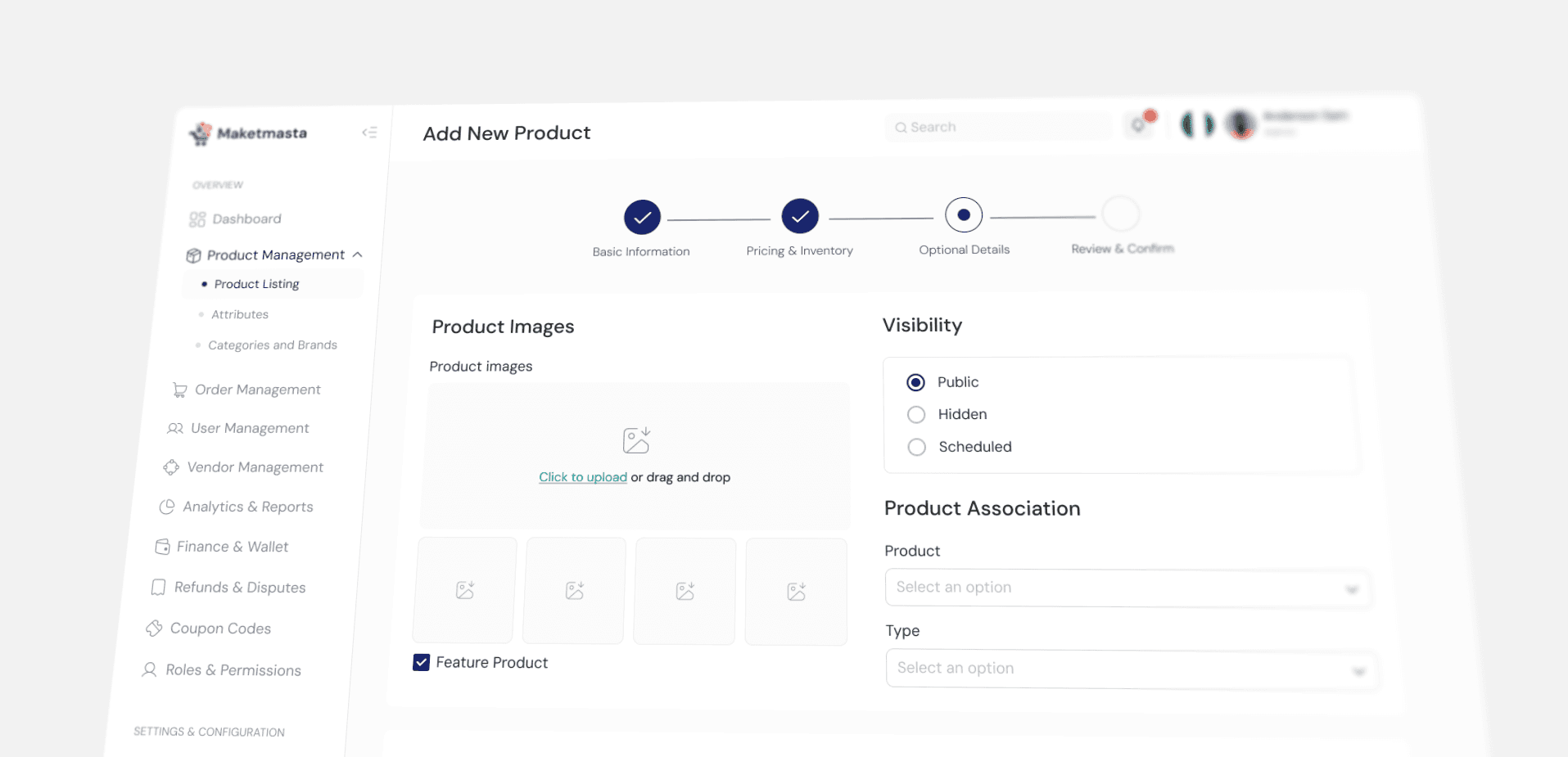
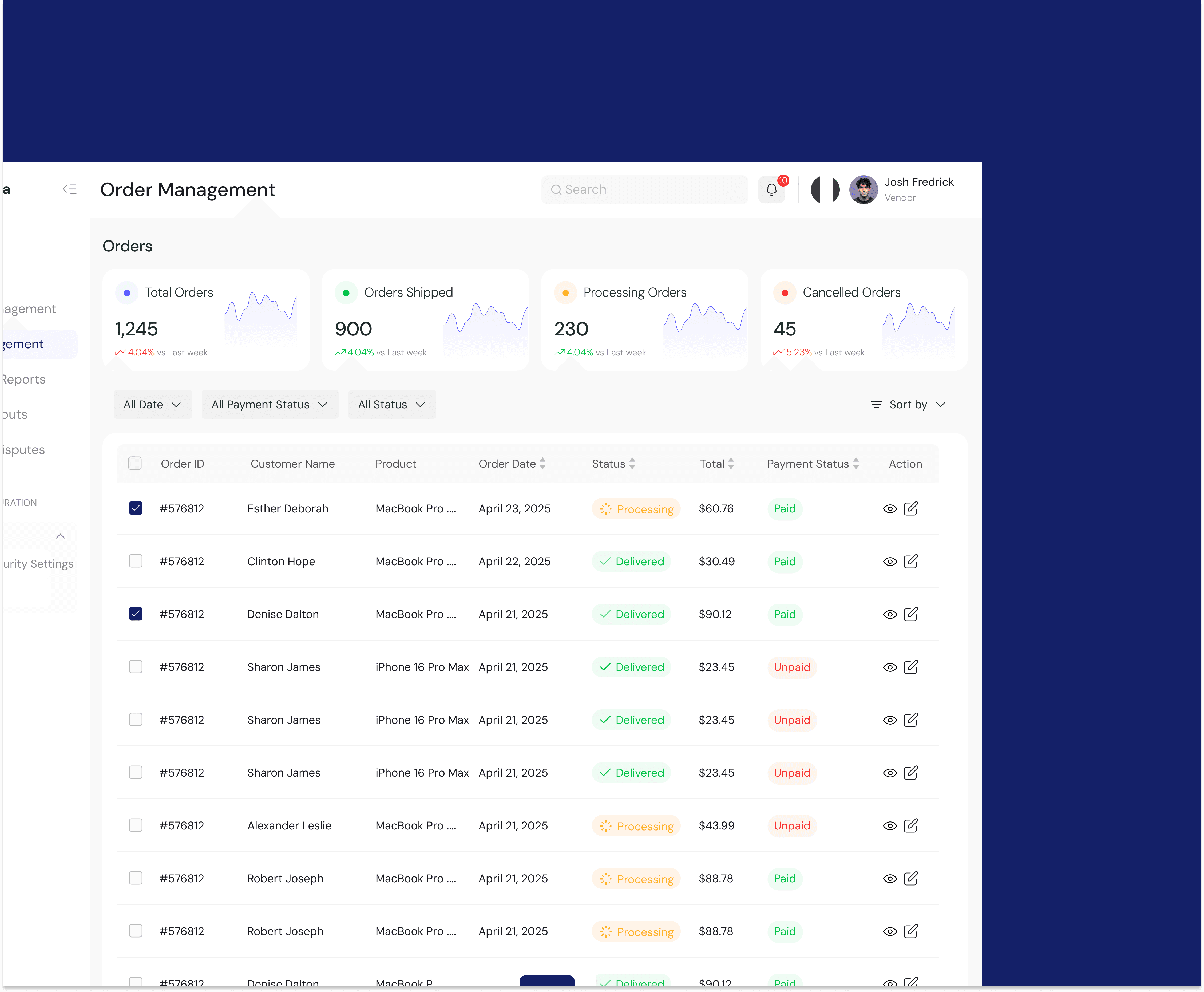
- Empowering Vendors: Vendors needed a workspace that felt business-focused rather than transactional. They needed visibility into orders, performance metrics, payouts, inventory, and refund requests without becoming overwhelmed.
- Creating a Mobile-First Shopping Experience: The marketplace required a modern mobile experience that made product discovery, purchasing, tracking, and account management feel intuitive and familiar.
Research & Insights
Instead of treating each user group separately, I mapped the entire marketplace journey from order creation to delivery completion, a few recurring patterns emerged.
1. Marketplace Operations Require Transparency: Administrators needed quick access to information, not more information. Visibility into payouts, disputes, order statuses, and vendor activity became more valuable than adding additional reporting layers.
2. Vendors Think Like Business Owners: Vendors weren't interested in platform metrics. They wanted answers to practical questions:
How much did I sell?
What products perform best?
What payouts are pending?
Which orders need attention?
3. Trust Drives Customer Decisions: Customers wanted reassurance throughout the shopping journey. Clear product information, delivery tracking, reviews, dispute management, and order history all contributed to confidence during purchasing.
These insights shaped every major product decision moving forward.
The Solution
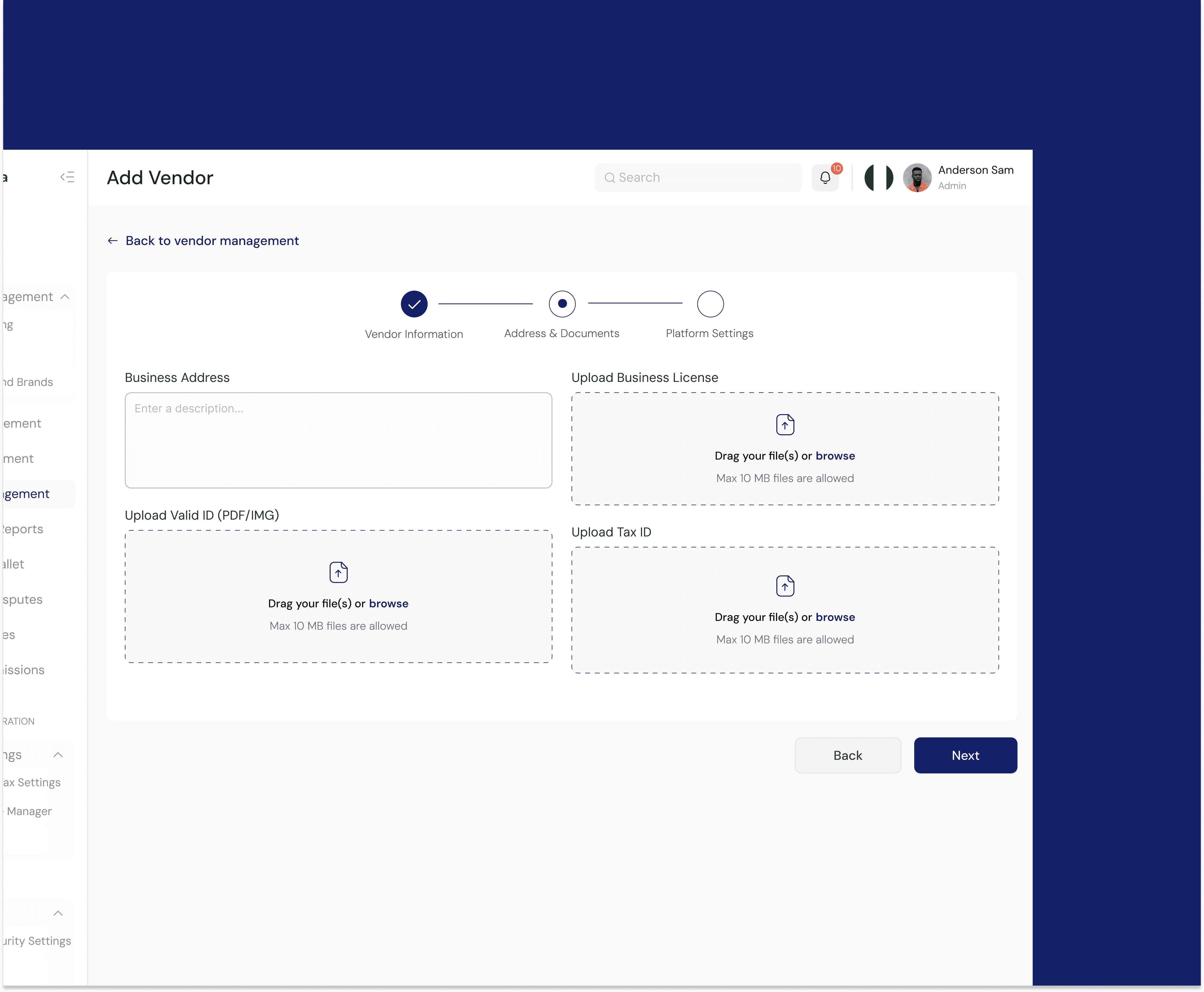
1. Designing the Marketplace Control Center
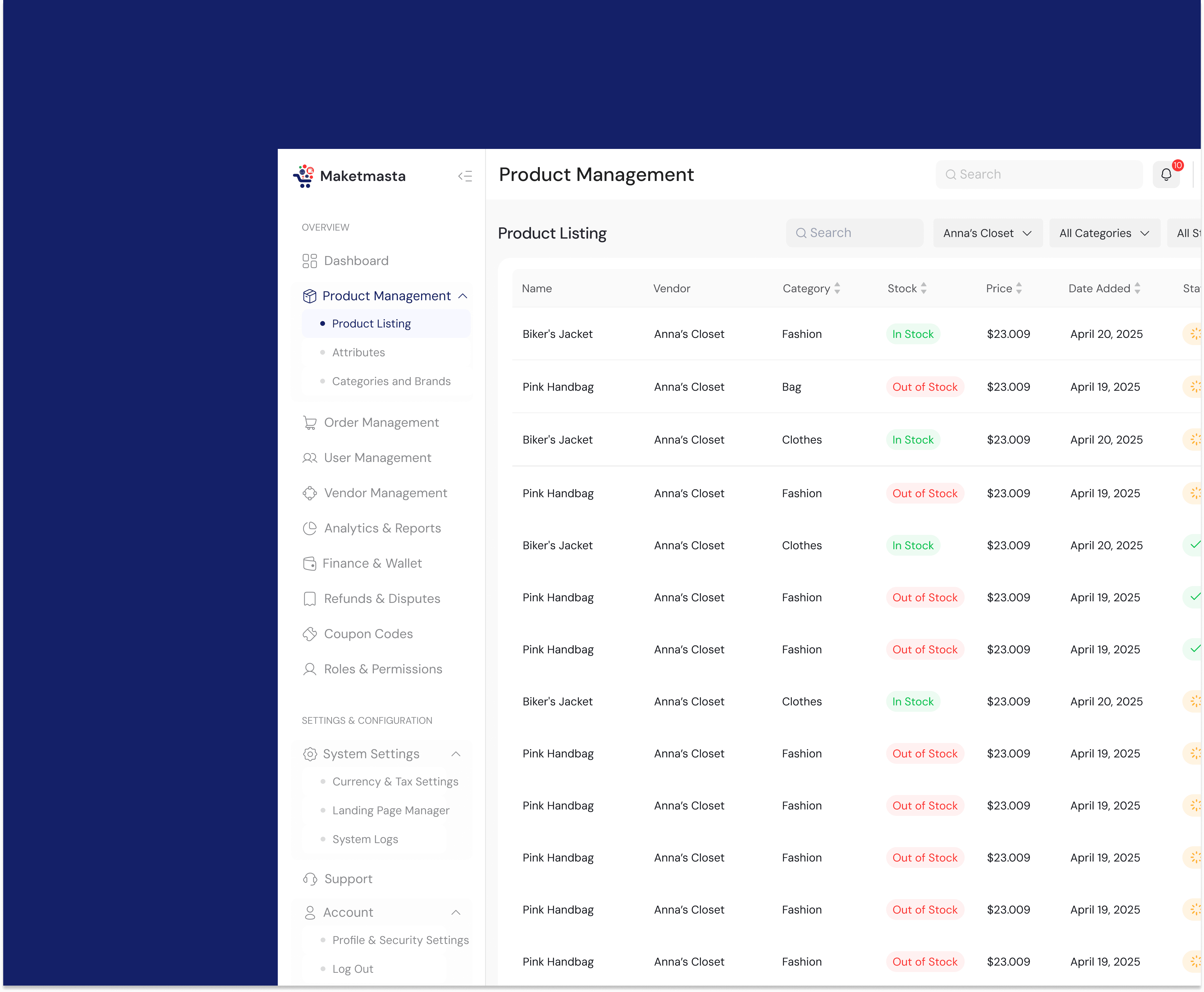
The Admin Dashboard became the operational command center for the platform. Rather than presenting administrators with dozens of disconnected tools, the experience was structured around visibility and action.
Administrators could:
Manage vendors
Monitor products
Approve payouts
Review disputes
Track platform performance
Oversee delivery operations
The goal was to reduce friction between identifying an issue and taking action.
2.Building a Vendor Workspace
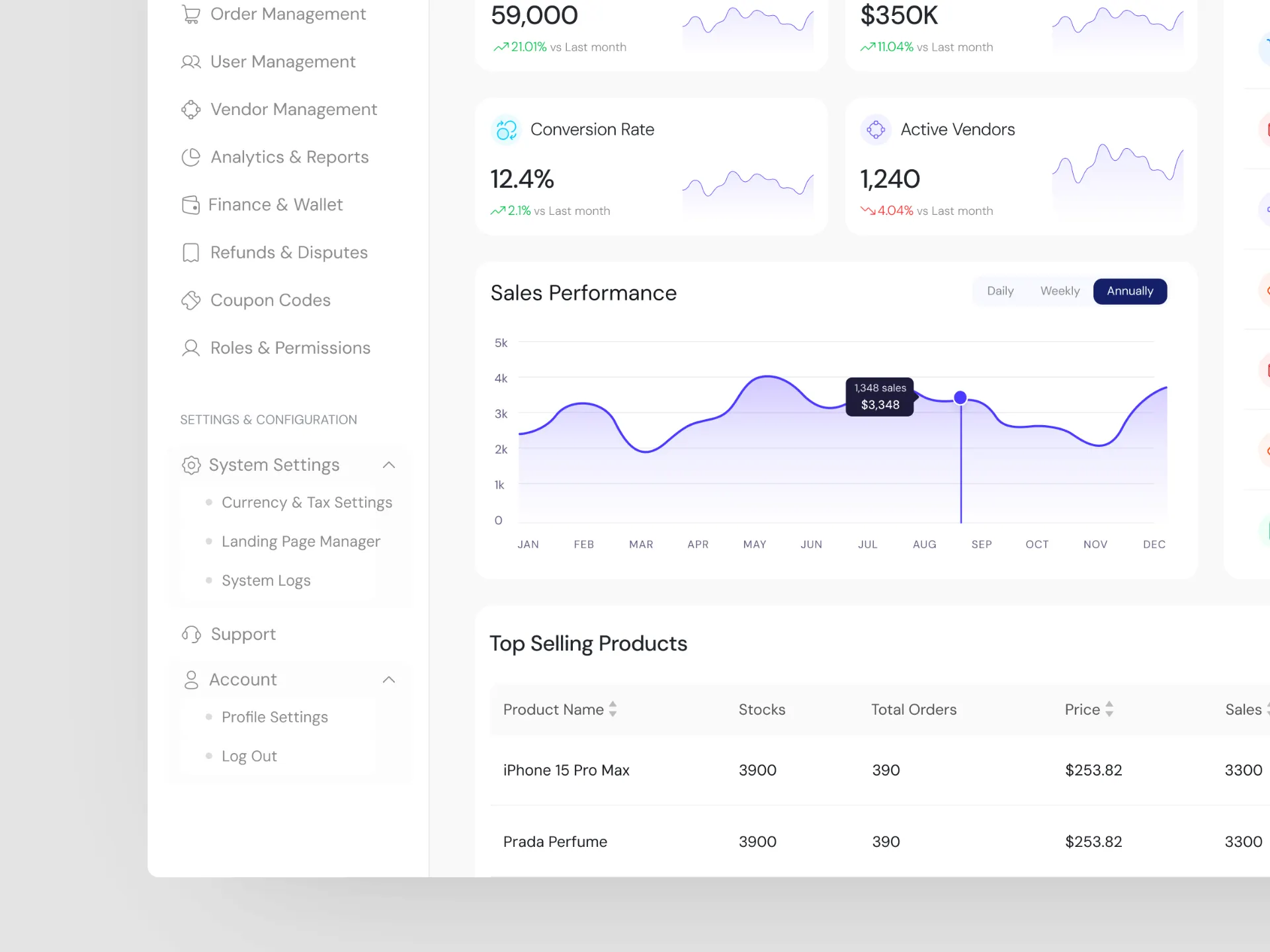
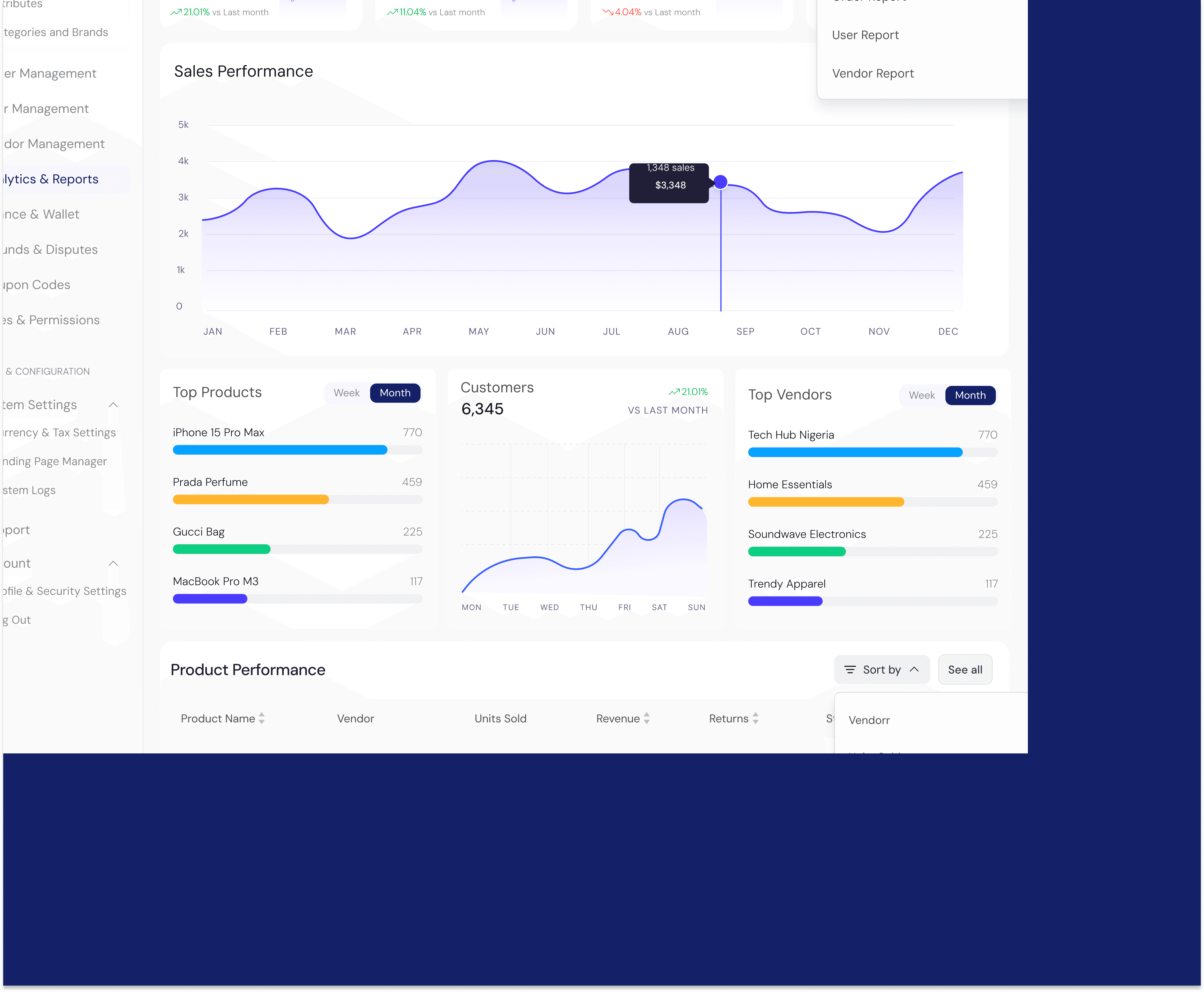
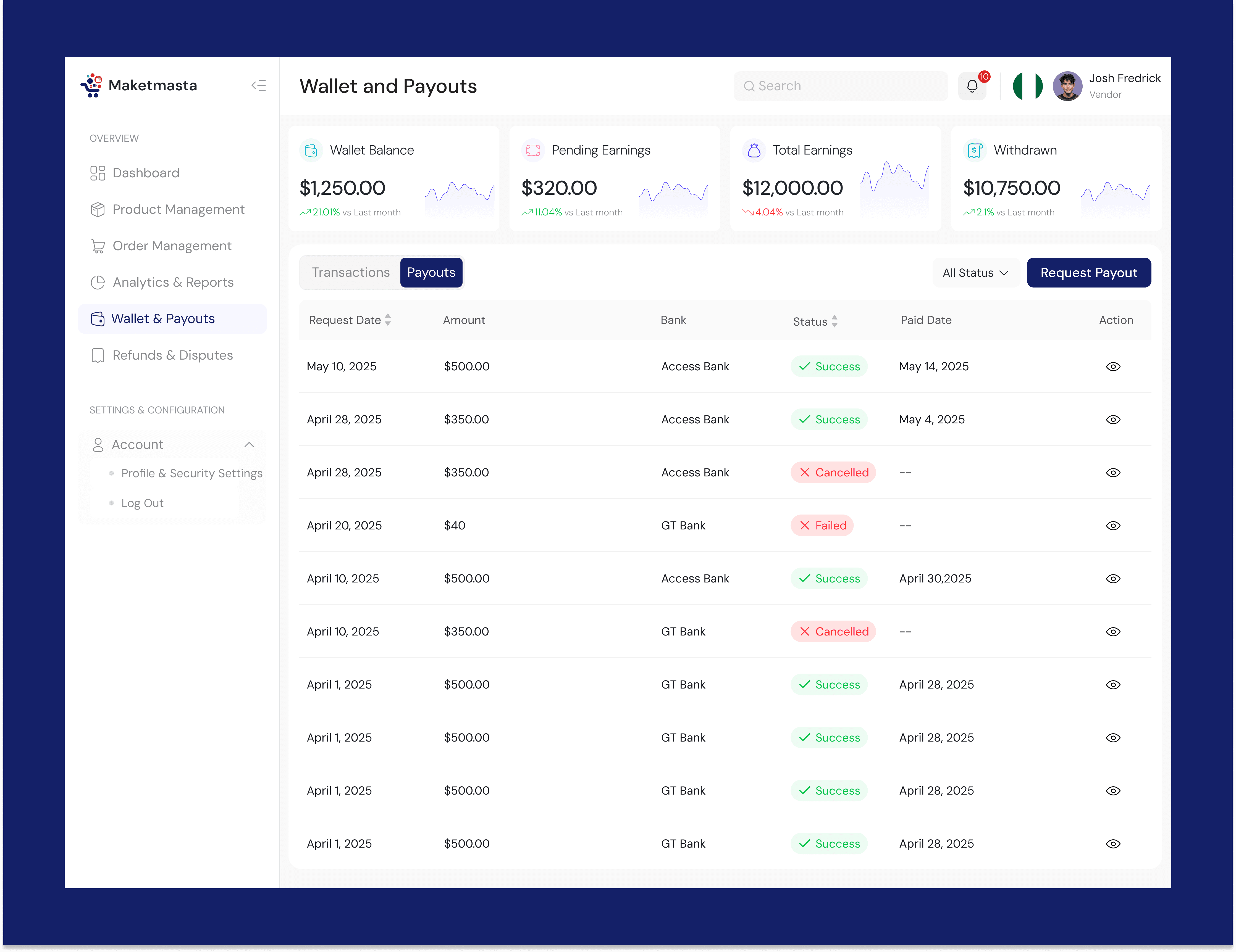
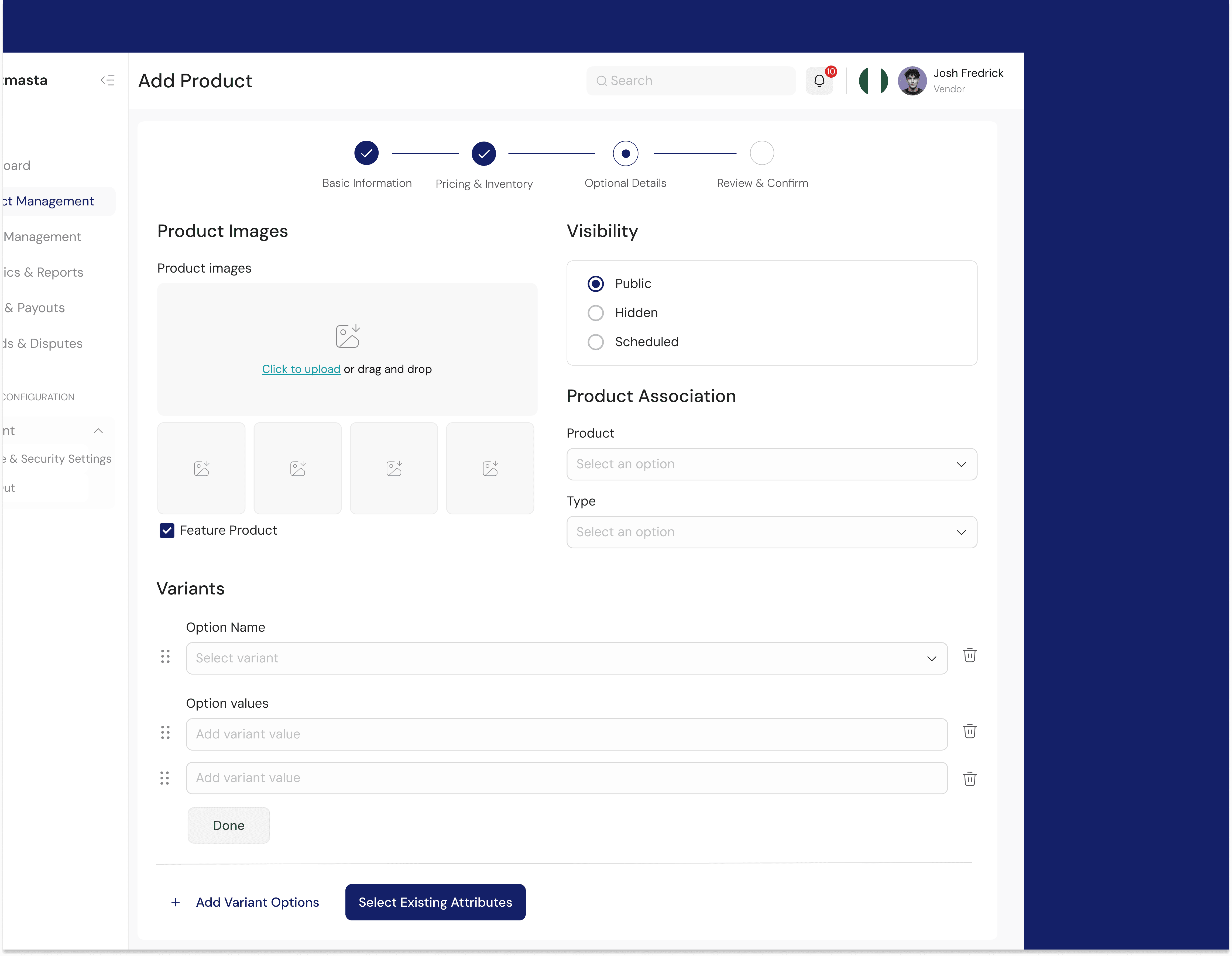
For vendors, the dashboard needed to feel less like a marketplace backend and more like a business management tool.
The experience focused on:
Order Management
Product Management
Analytics & Reporting
Wallet & Payouts
Refund Tracking
Profile & Security
Instead of overwhelming vendors with excessive analytics, the dashboard surfaced actionable insights such as sales trends, top-performing products, revenue, returns, and conversion metrics.
The result was a workspace that helped vendors understand their business rather than simply manage orders.
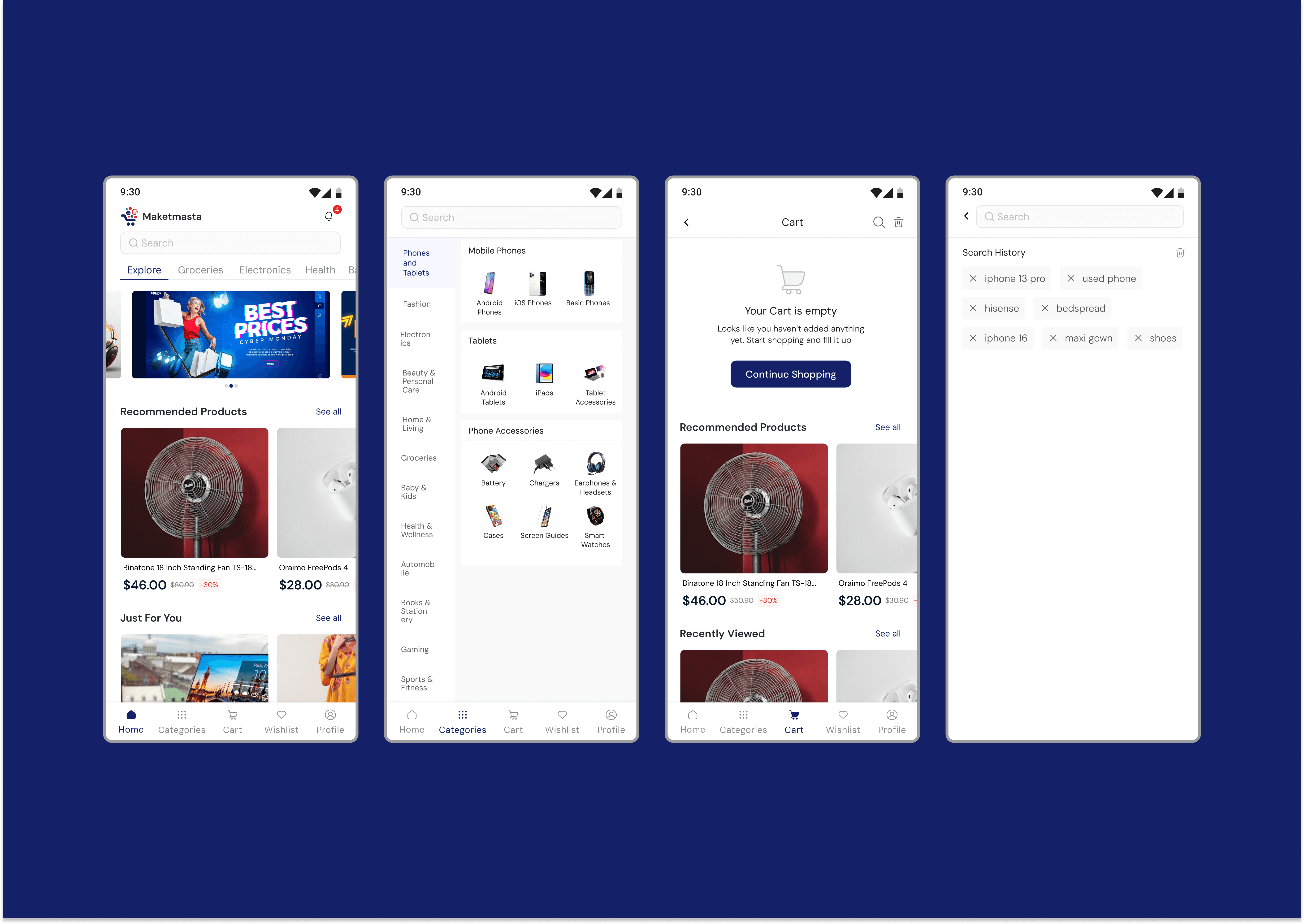
3. Reimagining Mobile Commerce
While operational tools powered the marketplace behind the scenes, the customer experience remained the face of the product.
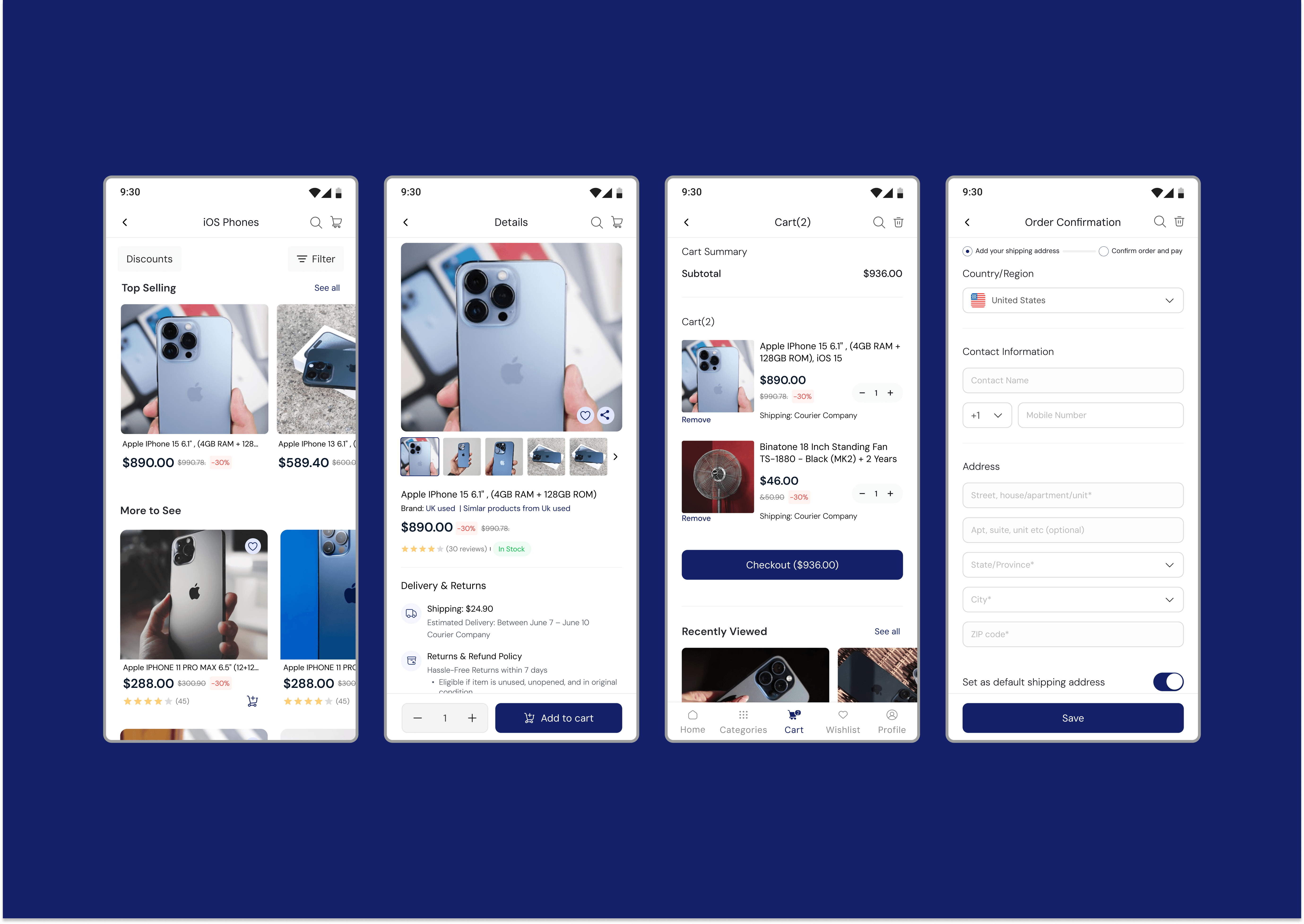
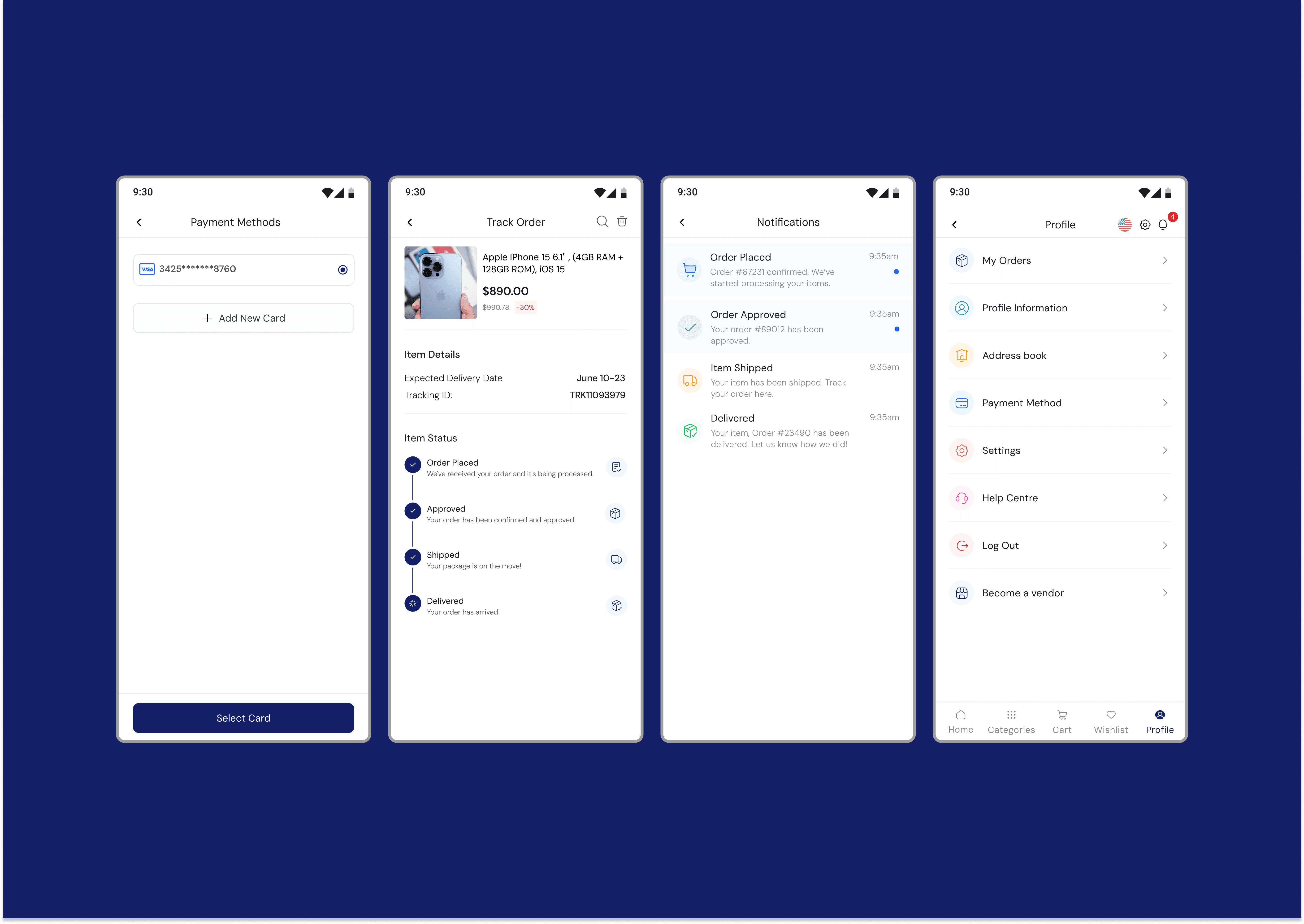
The mobile application was designed around speed, trust, and discovery. From onboarding to checkout, every interaction was streamlined to reduce friction.
Key experiences included:
Product Discovery
Search & Filtering
Product Details
Cart & Checkout
Order Tracking
Reviews & Ratings
Dispute Submission
Wallet & Refund Management
The design language emphasized clarity, strong visual hierarchy, and familiar marketplace patterns to reduce the learning curve for new users.
4. Improving the Existing Web Experience
Beyond dashboard and mobile design responsibilities, I was also tasked with improving selected areas of the customer-facing web platform.
Rather than redesigning the entire experience, the focus was placed on high-impact touchpoints where usability and presentation could be improved. These improvements helped align the web experience with the newer dashboard and mobile products.
Learnings
MaketMasta reinforced an important lesson about marketplace design. The success of a marketplace is rarely determined by the storefront alone. What ultimately creates a reliable ecosystem is everything operating behind the scenes.
Designing for customers, vendors, administrators, and logistics teams simultaneously required balancing competing needs while maintaining a consistent experience across the platform.
The project challenged me to think beyond individual screens and focus on how entire systems operate together.
It also strengthened my ability to design products that support both business operations and customer experiences at scale.